
Email today to buy or store your DASEIN System 6 can carton today.
[email protected]

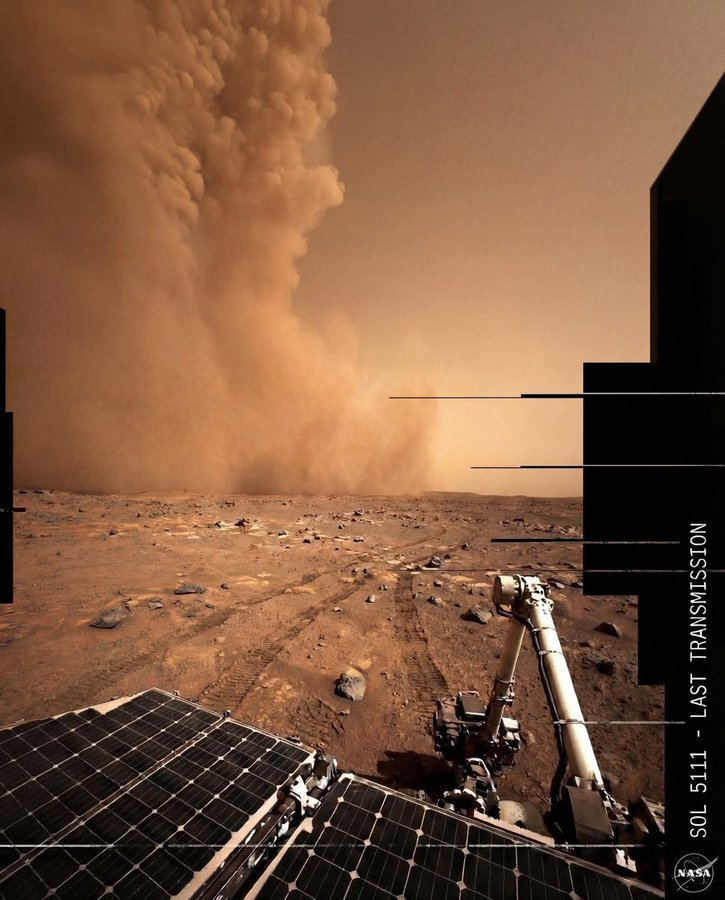
My battery is low and it's getting dark." These haunting words, sent from 225 million miles across the void, became the poignant farewell of NASA's Opportunity rover—affectionately known as Oppy—before it fell silent forever. Launched in 2003 and landing on Mars on January 25, 2004, Opportunity was designed for a modest 90-day (90-sol) mission to search for signs of ancient water. Instead, this plucky little solar-powered explorer defied every expectation, outlasting its warranty by a staggering factor of 55, roaming the Red Planet for nearly 15 Earth years (5,498 days / 5,352 sols). It traversed over 45 kilometers (28 miles), survived brutal dust storms, climbed crater rims, and delivered groundbreaking discoveries: definitive evidence of past liquid water, minerals formed in water, and hints that parts of ancient Mars could have supported microbial life.But in June 2018, a massive planet-encircling dust storm engulfed Mars, blocking sunlight for months and starving Oppy's solar panels. On June 10, 2018 (sol 5111), from its resting spot in Perseverance Valley on the rim of Endeavour Crater, the rover sent its final transmission: a sparse packet of engineering data revealing critically low power levels and extreme atmospheric opacity (tau = 10.8, the highest ever recorded on Mars—essentially turning day into endless night). No literal words were spoken—rovers don't "speak" in English—but NASA's engineers interpreted the fading telemetry as the equivalent of: "My battery is low and it's getting dark." Science reporter Jacob Margolis popularized this poetic paraphrase from conversations with the team, and it instantly captured hearts worldwide, turning a technical data dump into one of the most emotional moments in space exploration history.NASA tried valiantly for over eight months—sending more than 1,000 recovery commands—but Oppy never woke up. On February 13, 2019, the mission was officially declared complete with a touching goodbye from mission control, including a playback of Billie Holiday's "I'll Be Seeing You."Oppy's last images (partial, noisy thumbnails from its Pancam, transmitted before full frames could be sent) showed the dim, dust-choked Martian landscape—one final glimpse from a tireless robot that became a symbol of resilience, curiosity, and the human drive to explore.Rest well, Oppy. You didn't just survive—you thrived, taught us, and touched billions. Your legacy rolls on in every future Mars mission.
Credit: NASA / JPL-Caltech / Cornell University (Opportunity mission imagery and archives)
If you're worried about ticks, put up an owl box.
The animal driving most Lyme disease in the eastern US is the white-footed mouse. Ticks that feed on them are far more likely to come away infected than ticks that feed on other animals. The bigger the local mouse population, the worse the next year's tick year.
A single barred owl pair raising chicks can take hundreds of rodents in a breeding season. Owls also don't carry Lyme. The bacterium can't survive their digestive tract, so an owl that eats an infected mouse is a dead end for the disease.
Researchers at the Cary Institute, the leading lab on Lyme ecology, have been explicit about this: "Landscapes that support predators have reduced Lyme disease risk."
One owl box on its own isn't going to fix a tick year. But a yard with owls, foxes, bobcats, and weasels in it has fewer mice, and a yard with fewer mice has fewer infected ticks.
If you have woods or fields nearby, a properly sized barn owl or screech owl box (different species, different ...
Dario has written that we need to “pace the frontier,” and Sam has agreed. People may be surprised by my response: go ahead.
You guys are the frontier. By any reasonable metric — market share, revenue growth, model capability — the two of you have a duopoly on frontier intelligence. You’ve also claimed the lead is widening because of recursive self-improvement.
I don’t see what you see in the lab. If the unreleased models are scary enough that you think you should slow down, I support your decision to be responsible.
But stop pretending you need anyone else’s permission. Stop pretending antitrust law has to be suspended so you can form a cartel. Stop pretending you need a regulatory approval process that supersedes product liability. Stop pretending METR is independent when it is intertwined with Anthropic’s investors and staff. Stop pretending you need those same evaluators to police competitors who aren’t even at the frontier.
Most of all, stop pretending the motivation to ...
Tonight, while you're asleep, several hundred million birds will fly over the United States in the dark. Most of them will pass directly over your house, a few thousand feet up.
More than 80% of North America's migratory birds travel at night. Warblers, thrushes, orioles, tanagers, sparrows. Birds that weigh as much as a few coins, crossing a continent between sunset and sunrise, navigating by stars and by the earth's magnetic field.
Mid-September through early October is the peak. On the biggest night ever recorded, radar picked up 1.25 billion birds aloft over the US at once.
And there's one thing standing in their way that you personally control: your lights.
Artificial light pulls night-migrating birds off course from as far as three miles away. Once they're drawn in, they circle the lit area, over and over, burning fuel they can't spare, until they either drop from exhaustion or hit glass. It's worst on low, foggy nights, when birds fly closer to the ground and the light bounces off the cloud ...